Our Guarantee Plan explained
With your property price and bond payment returned when you leave, our Guarantee Plan keeps things simple and stress free.

Many people aren’t sure what sets a retirement village apart from aged care. To help make things clearer, we’ve outlined the key differences and answered some of the most common questions.
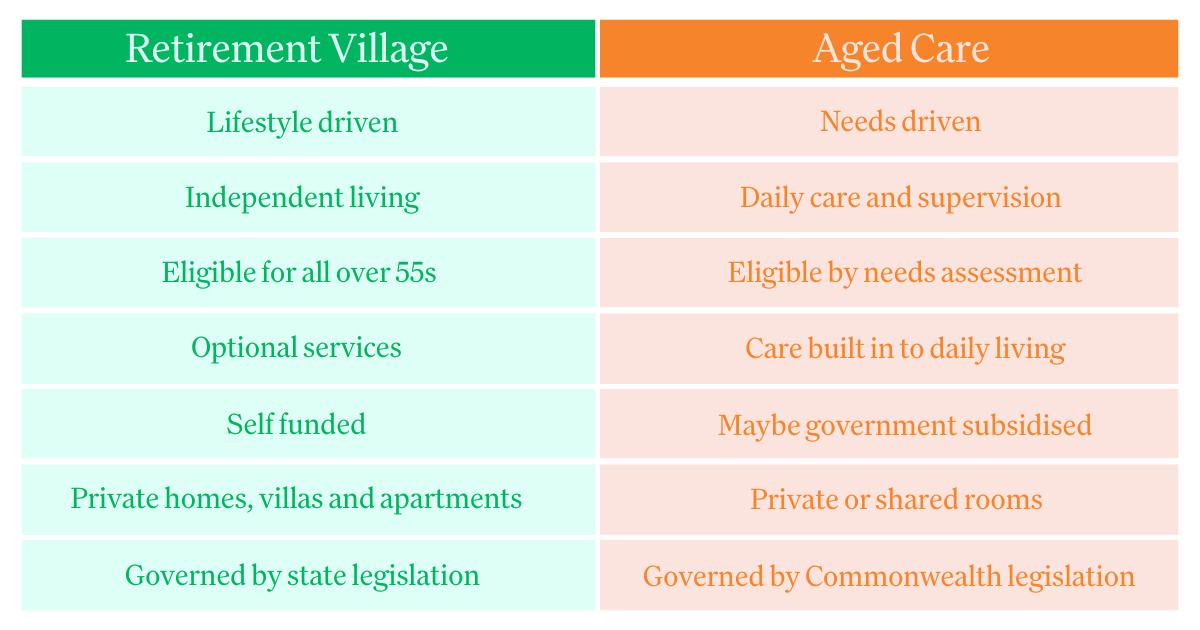
The biggest difference between aged care and retirement villages comes down to independence.
Retirement villages are suited to people who want to live in their own home and maintain their usual routines, with the added benefit of a community around them. Aged care is best for those who can’t live independently and need ongoing care and support.
If you think you might need additional support or aged care services, the best place to start is the Australian Government's My Aged Care website.
If you’re over 55 and want to live independently, retirement living is a great way to downsize and enjoy the benefits of fewer household responsibilities and shared amenities.
Residents in our villages live in their own home, villa or apartment. Monthly service fees typically cover maintenance and amenities, while some villages with Serviced Apartments offer optional services such as meals, cleaning or visiting health providers if needed.
Joining a retirement living community can be a wonderful way to stay connected and meet new people. There's a range of social groups, clubs and activities to get involved in, like fitness classes, sporting groups, craft clubs and organised outings. Whether you enjoy sport, social events or simply catching up with like-minded neighbours for a coffee, there are plenty of opportunities to build friendships and be part of a welcoming community.

If you’re researching senior living for yourself or a family member, here are some of the most common questions people ask when they’re starting to explore their options.
A retirement village is designed for people over 55 who want to live independently while enjoying a community environment and optional services.
An aged care facility is designed for people who need daily personal care, supervision or medical support. Entry into aged care is based on an assessment of care needs.
Retirement villages are communities for people aged 55 and over who want to live independently, with fewer maintenance responsibilities and more time to enjoy life.
Residents live in their own home, villa or apartment and have access to shared amenities, activities and optional services. Many villages offer social groups, fitness classes, hobby clubs and outings, along with resort-style facilities such as pools, gyms, community centres, bowling greens and veggie gardens.
The best part is you can choose how social or active you want to be, with the freedom to get involved as much or as little as you like.
Most retirement villages are designed for people aged 55 and over, and you don’t need to be retired to move in. Many residents are still working, running businesses or travelling regularly when they make the move.
Further reading: Read about some of the residents who still enjoy working while living in a retirement village.
Residential aged care, sometimes called assisted living, provides accommodation, meals, personal care and medical support for people who can no longer live independently. Entry is based on an aged care assessment that determines the level of care required.
Senior living is a broad term for independent living options for older people, such as retirement villages.
Assisted living, more commonly known as aged care, refers to accommodation where help with daily tasks or personal care is available, making it suitable for people who need more regular support.
If you think you or a family member may need aged care, the first step is to contact My Aged Care, the Australian Government’s central service for aged care information and assessments. They can arrange an assessment to determine eligibility for government-funded support.
Further reading: Visit the My Aged Care website for information on how to get assessed.
As you get older, you may start to think about getting a little extra help — from assistance with everyday tasks at home to more regular support.
The My Aged Care website provides information about the range of services available, from at-home care through to residential aged care.
Yes, you can. Living in a retirement village doesn’t affect your ability to access home care services. If you’re eligible, you can arrange government-funded or privately funded home care to visit you in your home, just as you would in the wider community.
These services can include help with cleaning, meals, personal care, nursing support and other day-to-day tasks. Many residents find this gives them the flexibility to continue living independently, with the reassurance that support can be arranged if their needs change over time.
Knowing the difference between retirement living and aged care makes it easier to plan ahead. With the right information, you can choose the option that best supports your lifestyle and future needs.
For more information about the lifestyle and support offered at our retirement villages, call our customer service team on 1800 550 550 or send us an email here.
If you think your family or friends might enjoy this article, please share it with them.