This cookie policy applies to Keyton Management Services Pty Ltd (ACN 618 487 504) as trustee for Keyton Management Services Trust (ABN 27 588 373 389) (Keyton, we, our, us) with its registered office at Level 45, 600 Bourke Street Melbourne VIC 3000, Australia and the cookies used on our website www.keyton.com.au and www.ardency.com.au.
1. INTRODUCTION
Cookies are small text files that may be stored on your computer (or other internet enabled devices, such as a smartphone or tablet) when you visit a website. They help websites remember information about your visit, like your country, language and other settings. They can also help make your next visit easier.
We use cookies and other similar technologies such as marketing tags for several purposes as described more fully below, including collecting information about the number of visitors to the site and customer demographics, which is used to improve the customer experience of the site.
If you wish to remove cookies placed on your device by our site or stop our site placing further cookies on your device you can do this at any time (more information about this in section "3. How to Opt-out of cookies" below).
2. CATEGORIES OF COOKIES USED ON THIS SITE AND PURPOSES
We use the following cookies:
Strictly necessary cookies
These are cookies that are required for the operation of our site. They include, for example, cookies that enable you to log into secure areas of our site. We do not require your consent to place these cookies. Nevertheless, you may be able to block these cookies yourself on your device/ browser, but restricting these cookies is likely to mean that our site will not work as you would expect and certain functionality may be inoperable.
Non-essential cookies
Analytical/performance cookies. They allow us to recognise and count the number of visitors and to see how visitors move around our site when they are using it. This helps us to improve the way our site works, for example, by ensuring that users are finding what they are looking for easily. We use cookies to compile visitor statistics such as how many people have visited our site, how they reached our site, what type of technology they are using (e.g. Mac or Windows which helps to identify when our site isn't working as it should for particular technologies), how long they spend on the site, what page they look at etc. This helps us to continuously improve our site.
We also use Google Analytics, Kentico Experience Platform, MS Clarity and other online tools to collect information about how users interact with the site. These tools use cookies to collect information in an anonymous form, including the number of visitors to the site, where visitors have come to the site from and the pages they visited. We use the information generated by these tools to prepare reports and improve the customer experience of the site.
Functionality cookies
These are used to recognise you when you return to our site. This enables us to personalise our content for you, greet you by name and remember your preferences (for example, your choice of language or region).
Targeting cookies
These cookies record your visit to our site, the pages you have visited and the links you have followed. This information will be used by us and third parties to make our site and the advertising displayed on it more relevant to your interests. We may also share this information with third parties for this purpose but only if you consent to such sharing.
Social Website Cookies
So, you can easily "Like" or share our content, we have included sharing buttons on our site for certain social media sites such as Facebook, LinkedIn and Twitter. These cookies are set by the third-party social media sites to which they relate, including:
LinkedIn
Twitter
Facebook
Instagram
WhatsApp
YouTube
The privacy implications vary from social media site to social media site and will be dependent on the privacy settings you have chosen on these sites. Please refer to the relevant social media site's privacy and cookies policy for more information.
3. How to Opt-out of cookies
Most browsers have cookies enabled by default. However, if you don't want to enable cookies, you'll still be able to browse the site.
If you wish to disable all cookies, you can usually opt-out by setting your browser to remove or reject browser cookies.
You can also delete cookies that have already been set through your browser settings.
Please note that if you choose to disable some categories of cookies that we use, you may experience reduced functionality.
Please note that third parties (including, for example, advertising networks and providers of external services like web traffic analysis services) may also use cookies, over which we have no control. These cookies are likely to be analytical/performance cookies or targeting cookies.
To learn more on how to disable cookies on your browser, please consult your browser "help" section or go to aboutcookies.org.
If you would like more information about how the Keyton uses personal data (being information which is capable of identifying an individual) generally, please see our Privacy Policy.
write to us at Privacy, Keyton, Level 45, 600 Bourke Street, Melbourne, VIC 3000
We aim to resolve all enquiries promptly and in accordance with Data Protection Laws.
We will always aim to address your concerns if you have any and would encourage you to contact us at the address above. You can also contact the relevant data protection/ supervisory authority in your jurisdiction.
5. Changes to THIS COOKIES policy
Any changes to this cookies policy in the future will be posted on this page. Please check back frequently to see any updates or changes to this cookies policy. We will also bring your attention to such changes by updating our cookie banner/ pop-up.
We use cookies to improve your website experience. You can manage the use of cookies by clicking on the "View Policy" link. By continuing or clicking "Agree" we assume you are happy with our use of cookies.
- View Policy
Contact
Contact Us
Complete the form below and we’ll be in touch shortly. Alternatively, you can call us on 1800 550 550.
Prioritise your mental health in retirement
Saturday, 13 December 2025
It’s just as important to focus on your mental wellbeing as it is on your physical health.
Retirement can bring uncertainty, loss and changes to routine, identity and purpose. As psychotherapist Marie Rowland from Talking Matters explains, "When you get to a certain age, say, post 65, your biggest concern becomes your health, because at some point you may lose the capacity to do things." For some, these changes to daily routine and decreasing opportunities for regular social interaction can lead to sadness, boredom, social isolation or depression, along with compounding physical impacts, especially when retirement is unexpected.
How can retirement living help?
Marie encourages people to acknowledge retirement as a form of loss while remaining open to new opportunities and meaningful activities. She also stresses the importance of speaking up about mental health challenges and seeking support when needed. Staying connected through community, volunteering or intergenerational activities can also help maintain a sense of purpose, self-worth and belonging later in life. Here are some ways to boost your mental wellbeing:
1. Find your balance
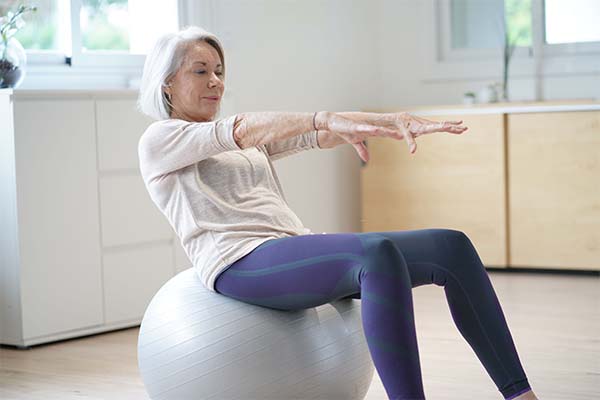
Experts recommend aiming for at least 30 minutes of physical activity on most days. This could include a variety of exercises focusing on fitness, strength, stability and flexibility - you could say it's all about a balanced approach! This can reduce the risk of falls and maintain mobility long term. Simple activities like heel-to-toe walking, leg raises and yoga poses can help improve stability and range of motion.
💡Did you know: Villages incorporate a range of classes and groups focused on health and wellbeing. You’ll find regular wellness classes tailored to seniors in many of our villages.
2. Have social interactions
"What social interaction does is lets you share the pain. And you deserve to be comforted and acknowledged. That's why therapy has become such a big thing nowadays because we don't take the time to genuinely validate each other. Everything is racing by. Children, grandchildren, life. Social interactions provide a genuine and meaningful connection but also slows life down to a rate that is compatible with your level of thinking and way of life. It's critical to reach out to your own family or support networks first. Because they can be the conduit to a practitioner who can help you," says Marie.
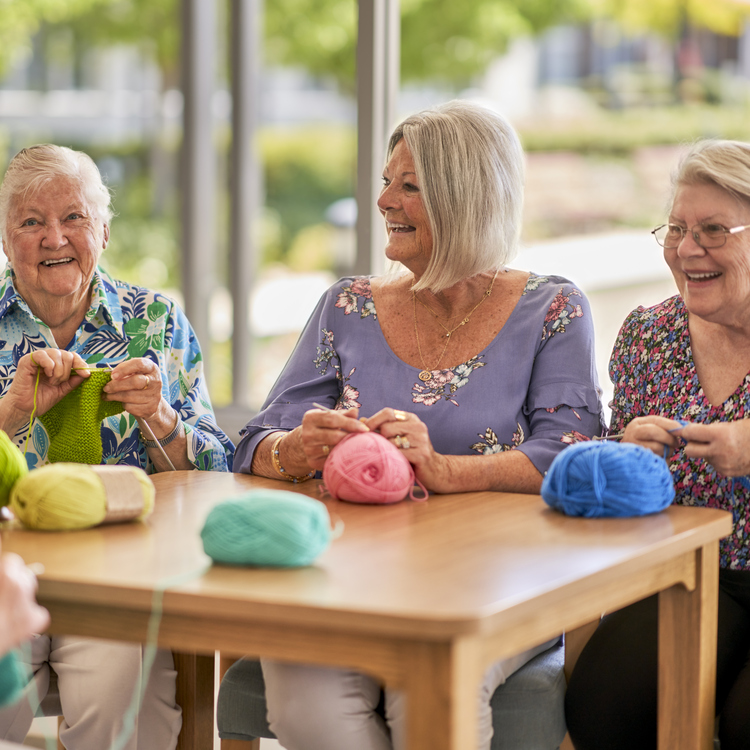
💡Did you know: Resident-led social committees organise regular community events, social gatherings and men's groups. From Friday night happy hours to an afternoon of musical entertainment, enjoying a laugh with neighbours was never so easy.
3. Get involved
Be a part of a community can have a positive effect on your mental health and keep you physically active. Start by thinking about what interests you and ask around about groups to join. There might be a local walking group that meets every week or a class that you’ve always wanted to try. For some friendly competition, joining a sporting club like bowls, tennis or pickleball can be just the ticket. Volunteering for a cause you care about is also a great way to stay active and give back to the community.
💡Did you know: There’s a range of social groups and regular activities at all our retirement villages. From hobby sheds to community gardens, bowls teams to craft groups, there’s something for everyone to get involved, meet new friends and stay active.
4. Take time to rest
While getting active and staying connected is important for your wellbeing, it’s also important to take time out to rest. Don't underestimate the power of sleep on your overall wellbeing. Your body and mind need that time to recharge and rejuvenate. A good night's sleep is like pressing the reset button, helping you wake up feeling refreshed
Regular self care can also look after your mental and emotional wellbeing. Whether you love to curl up with a good book, take a leisurely bath, or simply close your eyes for a while, make sure to carve out time for yourself on a regular basis.
💡Did you know: Many of our retirement villages offer peaceful garden spaces, cosy libraries and quiet lounges, perfect for unwinding, reading or simply enjoying a moment of calm. Because looking after your wellbeing also means giving yourself time to rest and recharge.
Ready to prioritise your mental health?
Search our 65+ villages and find a community that's right for you.
For more information about the lifestyle and support offered at our retirement villages, call our customer service team on 1800 550 550 or send us an email here.
If you think your family or friends might enjoy this article, please share it with them.